Tuesday, March 30, 2021
Sunday, March 7, 2021
Marvel (FASERIP) Praise + Revised Character Sheets
But Marvel Super Heroes (FASERIP) is the greatest super-hero role-playing game ever made. Even though I played it to death, haven't touched it in years, having moved on to Heroes Unlimited or some variation there-of, including whole systems invented by yours truly (should post them here one day.) I now feel that no game captured comics like Marvel did.
Next thing you know, it's 3 A.M. and my sheet's been redesigned, with variations over the next couple of days. I guess the dungeons will have to wait a minute.
Marvel Super Heroes is such a solid game, they could republish it today with minimal tweaks. Our young minds didn't appreciate the finer details enough. We never used the defensive maneuvers (how cool is block? -- granted I would use it more proactively than rules-as-written) and we weren't all that creative with our powers -- some of which need to be fleshed out a bit more and given more practical use examples.
Another thing Marvel could've done better is character creation. As it stands, it's completely random -- which is a good thing, I love making sense of random rolls, but, there should be more archetypes available. Something like this:
- Awesome
- Marvelous
- Outstanding
- Uncanny
- Magnificent
- Sensational
- Spectacular
- Astonishing
- Fantastic
- Impressive
- Astounding
- Exceptional
- Stunning
- Dreadful
- Horrendous
- Terrible
- Ghastly
- Unspeakable
- Atrocious
- Shocking
- Pathetic
- Nightmarish
- Awful
- Eerie
- Abominable
- Lousy
- Alarming
- Daunting
- Formidable
- Harrowing
- Distressing
- Terrifying
- Ungodly
- Mundane
- Maniacal
- Demented
- Beyond
- Unreal
- Ridiculous
- Feeble -- Pathetic (2)
- Poor -- Lousy (4)
- Typical -- Mundane (6)
- Good -- Formidable (10)
- Excellent -- Daunting (20)
- Remarkable -- Alarming (30)
- Incredible -- Shocking (40)
- Amazing -- Ghastly (50)
- Monstrous -- Maniacal (75)
- Unearthly -- Horrific (100)
- Shift X -- Abominable (150)
- Shift Y -- Unspeakable (200)
- Shift Z -- Beyond (500)
In order to make the result table fit, I combined the Blunt & Edge, Fighting & Agility results columns into one. This means you can now Slam with a throwing blunt attack. Which actually fits -- how many times have you seen Cap's thrown Shield or Thor's flying Hammer slam an opponent into the next area? How about a certain cinematic manhole cover? -- "Superman...!"
This was the first revision. The idea was to record the numbers you need to roll for each color feat, per ability...
And here's a sample character named Opal, an entity from the Darkforce Dimension -- that's all we know, that's all we'll ever know, because mysterious is better, every time. For a randomly rolled character, she makes a lot of sense. She can't control the Darkforce like Cloak, but she can generate it, and that stunning option is enormously powerful -- stun your opponent for 1d10 rounds if they fail their endurance roll. Yikes! I would allow and endurance roll every round to snap out of it. Maybe I would change it to touch only (she reaches an ethereal Darkforce hand inside you and grasps your heart...!) She makes a good villain, dangerous, and if she starts to lose, Bamph! -- she's gone to the Darkforce Dimension --she has to roll for that, of course.
And Martial Arts D allows her to slam and stun opponents with body armor who take no actual damage from the attack (I would ignore the fact that you're supposed to study your target for 2 rounds first, hate that kind of crap.) Very useful considering she only has typical strength, i.e., if she ever finds herself unable to generate Darkforce blasts. This Talent is an example of something we almost certainly overlooked or forgot while playing.
So play some Marvel, have a blast! And remember, when villains win, they usually leave the hero lying battered and unconscious in a dark alley or they capture them and leave them unattended in some sort of death trap. Playing one-on-one? -- introduce a new hero who has to rescue the first one (guest starring, the Marvelous _________!)
And keep track of the villains that you've captured, who are now locked up in a super-max facility. When in need of a random encounter, create a random breakout table. No need to explain how...
Could look something like this:
It's Clobberin' Time!
Monday, February 22, 2021
Making Daggers A Deadly Option
The dagger is an iconic symbol of death.
Yes, it's also a tool used to cut and skin, but it's main purpose, as a dagger and not a knife, is to kill.
At 1d4 points of damage, good luck with that. Even at low levels, unless you score a critical hit, your opponent is not going down. Now, that does make sense. There's a reason warriors took swords and axes and maces and spears into battle, and not daggers. They all had daggers, though, just in case.
As did/does every single D&D character ever made. You always buy a dagger. Always.
You almost never use said dagger. Even if you're a wizard of some sort. When most editions allow quarterstaffs/staffs (staves) to do 1d6 points of damage, a dagger is pointless. As an aside, I would argue that if a spear does 1d6, a staff should only do 1d4.
Anyhow...
The fact that daggers were an important tool for the heavily armored knight is starting to show up in cinema. Two knights dueling with long weapons, swords, poleaxes and such, would mainly do so to tire each other out. The idea seems to have been, to exhaust or overpower your opponent, knock them prone, pull out your dagger and go for the kill. Many knight duels turned into armored wrestling matches. Lacking a time machine, such is only my current impression.
One game out there expressed this well: Pendragon by the late Greg Stafford. In Pendragon, if you make a successful grapple attack, you can get in close and stab with a dagger at weak points in your opponent's armor. Mechanically, armor is damage reduction, which is cancelled out by daggers if you have successfully grappled your foe. Since damage is mainly based on strength and not weapon, your dagger has just become very deadly indeed.
The drawback to grappling is that it's not that easy to pull off.
Let's import this to D&D.
First you need to grapple, dagger in hand. Ignore armor class for this. A grapple should be a contested "to-hit" roll with longer weapons having advantage (or +4 to hit.) If you're using Thac0, you'll need to figure out your actual "to-hit" bonus. You may allow someone to add their shield bonus to the roll, but once grappled, that person will have to drop their shield, or that bonus becomes a penalty. Strength bonuses also apply.
A grappling attempt, successful or not, is your turn spent for that round. If you succeed, your opponent may spend their round trying to escape (another contested roll) or trying to hurt you (also a contested grappling roll, doing unarmed damage) or, if they're holding a dagger, they can attempt, as you were attempting, a killing blow -- which is most likely in the form of stabbing the throat. Another option, if you've been grappled and aren't wielding a dagger, but would like to grab yours instead of trying to escape, simply make a contested grappling roll. Note for contested grappling rolls, you can not use any bonuses gained from non-dagger weapons, i.e., no matter how magical your longsword is or how proficient you are with it, it's useless to you when making grappling rolls. An argument could be made on behalf of short swords.
Killing Blow: Another contested grappling roll. If you succeed, your opponent must save vs. death or be killed instantly. If they make their save vs. death, you merely do the usual 1d4 dagger damage.
This might seem too deadly, but four rolls must go your way for it to work: Your first grapple, their resistance to that, your killing blow, and their saving throw. Also, this maneuver is much less likely to succeed against higher level/HD characters due to them having better death saves.
It brings some grit to your games. It adds some of that classic "dishonor" to daggers, and it puts just a touch of fear into the hearts of heavily armored knights when someone decides to fight dirty.
This shouldn't be allowed against non-humanoids and larger humanoids.
Unless of course, you want it to...
Tuesday, February 9, 2021
Rifts: To Juice Or Not To Juice?
Revenge?
Money?
Freedom?
Adventure?
What price are you willing to pay...?
And so you paid...
And now your body, filled with nanobots and cabled with drug-pumping tubes, is capable of astounding feats that defy the limits of humanity. You are cold and efficient -- very efficient. You're so fucking fast. The battlefield around you moves in slow-motion. It's almost too easy.
So hard to kill. You don't tire for days and when you do sleep, well, it's barely a nap.
The juice has made you the perfect super-soldier.
And after 5 years your heart will explode.
Thanks for your service.
Juicer.
Hope it was worth it.
And now, some Juicer death mechanics, for which, there really are none. Juicer Uprising has a table to roll on when you reach your final year, detailing symptoms of the end such as the shakes and memory loss, but nothing that signifies death itself or even when that final year actually arrives. Savage Rifts has Burn mechanics -- which aren't bad, but I prefer...
Burn-Out in 3...2...
- Burn-Out utilizes a usage die. Anyone reading this should know what that is, but just in case: If you roll a 1 or 2 on a usage die, that die becomes the next lower die, e.g., d20 becomes d12, which would become d10, then d8, then d6, and finally a d4.
1st level Juicers begin with a usage die of d20. At the end of every session, roll your usage die, if you roll a 1 or 2, it falls to the next die. If a session sees no or very minimal combat, the GM may wave your burn-out roll for that session. You should theoretically have many sessions (absolute, extreme bare minimum of 6) before reaching a burn-out die of d4.
Death Is Imminent...
Once you roll a 1 or 2 on a burn-out die of d4, death is imminent starting the following session. At which point -- after every single round of combat, you need to make a burn-out save against target number 20. Juicers already have a +8 vs. toxins which can be applied to this roll along with any bonus received from a high P.E. stat. Subtracted from this roll is your level.
Burn-Out Roll = +8, +P.E. bonus, minus your level vs. 20
If you fail this roll, your heart will explode and strange chemicals will froth forth from your mouth as your well-used and smoking body falls dead. If combat is still ongoing however, you immediately get one last free round of actions before you expire, wherein any damage you do is doubled as you burn out in a wild blaze of glory.
Just a thought.
Afterthought...
- You want to play extreme? Roll the burn-out die after every combat instead of every session from the very beginning.
Sunday, January 31, 2021
5 Experimental Magic-User Templates
The one common sacrifice for choosing a template over the standard Magic-User is...(because otherwise, why would anyone just be a Magic-User?)
- You use the Magic-User spell progression but only half as fast, gaining spells at levels 1,3,5,7,9,11,13,etc.
Seer -- You have the sight; you see things. Every night, you dream of what may or may not come to pass. Your mind is a cloud of possibilities; you can affect the fortunes of many...
- Visions -- Every morning you receive a number of visions equal to 1d4 + wisdom bonus. Roll this many d20 and record the results. You may replace (after the fact) any d20 rolled by anyone that day with one of your vision rolls. In games where skills are rolled on a d6 (or for secret door type rolls), you may roll any number of d6 instead of d20s. You may also spend one of your vision rolls to reverse the numbers of a percentile roll. Unused visions fade away like old dreams by the end of the day. You receive one extra vision at levels 4, 8, and 12.
- Fortunes -- You may sacrifice one of your daily visions and let someone else roll one in the form of a fortune. The recipient of the fortune can apply that fortune roll just like a vision roll but it can only apply to themselves, i.e., their own skill/attack/saving-throw roll or the roll of someone trying to harm them. A fortune can also be spent to reverse the numbers of a percentile roll.
- Example of a fortune -- During morning preparations, the party fighter notices that the seer keeps staring at him. "What?" he asks. The seer wanders over and whispers something in his ear (or maybe he throws some bones or flips a few cards.) The fighter's eyes widen as he receives a cryptic message that will make more sense at a later time. He nods as he gives the seer an odd look. Later, in a fight against an ogre, the fighter zigs when he could've zagged, avoiding what might have been a fatal blow.
- You can cast both Magic-User and Cleric spells.
- Evil Eye -- If you have not yet acted this round, you can immediately give someone or something the Evil Eye, thus placing a hex on whatever roll they are about to make. The target of this hex suffers extra-disadvantage on that roll (rolling three dice and taking the worst result.) Using the Evil Eye uses up your action for this round. A Witch can use the Evil Eye a number of times per day equal to 1d4 + her charisma bonus.
- Cauldron -- You can prepare, as potions, any spell you know with cure or remove in the title, along with sleep and charm, and any other spells your DM agrees to. You do not need to lug around a large cast-iron cauldron to do this, a small, portable leather one (2 GP) will do.
Alchemist -- You've discovered that the secrets of magic can be distilled from substances in the physical world. Potions, vapors, ointments, powders, and oils are your game, but your work isn't necessarily, an exact science.
- You can cast both Magic-User and Cleric spells.
- Alchemical Spells -- Any of your daily spells can be prepared as, or later converted to, elixirs, potions, oils, ointments, vapors, etc.,(use your imagination) that anyone can use. These alchemical spells lose their potency after one day if not used. Converting an already prepared spell takes 1 turn per 2 levels of the spell.
- Examples -- Drinking a fireball elixir might result in someone spitting said fireball from their mouth. After drinking a charm person elixir you may only need to breath softly in someone's face. A web elixir might expand when the vial is shattered on the floor. Alchemical sleep might result from the vapors released from an small uncorked jar. Remove fear could require sniffing some sort of powder. Locate object would be a bead of rolling mercury. Spider climb might be an oil rubbed on your hands.
- Volatility -- Alchemical Spells are unstable and have a chance of exploding or corroding equal to the spell's level in 20 (d20 rolled by the user.) If the solution proves volatile, the spell fails and the user must save vs. poison to avoid taking 1d3 points of damage per spell level. Alchemists can safely use their own Alchemical Spells and if using one created by another alchemist, they have advantage on the saving throw.
- A portable Alchemy Kit is required to make alchemical spells. The initial kit usually comes in the form of briefcase-sized box, costs 75 GP and can produce 12 levels of alchemical spells. There-after, the equipment (vials and such) needed to produce 10 levels of alchemical spells is 30 GP.
Necromancer -- Pariah doesn't even begin to cover it. Nobody likes you. You smell of death because you play with death. You are cold and dark and morbid and consumed with secrets from beyond the grave.
- Necroscope -- By cutting open and sifting through the innards of a corpse, you can glean it's secrets. This morbid, trance-like process takes as long as one turn per hit die of the corpse and often results in quite a mess. Once a corpse has been torn apart by this ritual, you can never glean secrets from that spirit again. Anyone watching (who isn't a necromancer) must save vs. death or violently retch for 1d4 rounds and also suffers disadvantage on their next saving throw vs. death in whatever form that takes. A Necroscope ritual can be used for the following:
- Cause of Death -- Use this ritual to discern exactly how and when someone or something died. This isn't so much a conversation, as it is, a reliving of the experience.
- Spells From Beyond -- You can use Necroscope to speak with dead Magic-Users, directly from their corpse (as above) or by sleeping on their grave, to gain a bonus spell that is potentially far more powerful than any spell you can ordinarily cast. Make a 2d6 charisma-based reaction roll as you discourse with the dead. If you roll 8+, you can choose any magic-user spell of any level the deceased wizard had access to. If you roll 3-7, the spirit gives you nothing. If you roll snake-eyes (natural double 1's) the spirit blasts you violently from their "rest" and you must save vs. death or suffer 1d4 points of necrotic backlash damage and cannot cast any spells for 1d4 days. You can only have one of these spells in your mind at a time, can cast it only once, and it fades from your memory if not cast within 1d4 + intelligence bonus days.
- Other Classes -- Communicating with a dead Fighter gives you a "to-hit" bonus equal to 1/2 their level (and the ability to use any weapon.) From a Cleric you gain turn undead equal to 1/2 their level or a Cleric Spell From Beyond -- see above. And from a Thief you gain thieving abilities at 1/2 their level. All levels are rounded up with a minimum level of one. Gaining these abilities requires a reaction roll of 8+ (double 1's have the same backlash as above.) These abilities stay with you for 1d4 + intelligence bonus days. You can only have one classes' abilities at a time and none if you currently have a Spell From Beyond.
- Skeleton Minions -- While others pay for hirelings, you raise yours from the grave. You need access to a long-dead corpse (graveyards are great) and 1 hit point of blood. The blood must be spilled onto the corpse (or grave) and a ritual performed that takes 1 turn to complete. Finally, you must successfully save vs. death, after which one skeleton will claw itself out of the grave and serve you until destroyed (use standard skeleton stats.) If your saving throw fails by 5 or less, the skeleton rises but will not serve you and may even attack. If your saving throw fails by more than 5, then the ritual fails completely. A Necromancer can have a number of skeleton minions at any time equal to their 1/2 their level (rounded up) plus their charisma bonus.
- Graveyards -- A typical graveyard will yield up to 2d6 raiseable skeletons (assume they come with rusted armor and weapon.) There is also a 13% chance (rolled by the Necromancer) that any particular graveyard is the resting place of some sort of adventurer. Roll 1d12 to determine the adventurer's level and 1d4 to determine the class: 1. Cleric, 2. Fighter, 3. Magic-User, 4. Thief.
Warlock -- You're a mysterious one, a haunted loner who makes his living by sword and spell. Your spells function more like powers, bestowed to you by a distant patron whose pawn you undoubtedly are.
- You may use weapons and armor like a Fighter, but still attack as a Magic-User.
- Your spells must be determined randomly, as it is up to your patron what powers you possess.
- Invoke Patron -- You can call upon your patron for assistance giving you one of the following boons:
- Advantage on attack rolls for 1d4+1 rounds.
- Cast a spell that you have already expended.
- Cast a spell that you do not know, but of a level that you have access to.
- Invoke Patron functions with a usage die, starting at d6. When you invoke your patron, roll your usage die, on a 3+ your boon is granted. On a 2 your boon is granted, but the usage die now becomes one die lower. On a 1, your boon is ignored, and your usage die becomes one die lower. If you roll a 1 or 2 on a d4 usage die, your patron ignores you for the rest of that day. At 5th level, your usage die becomes a d8, and at 10th level it becomes a d10. Your usage die resets to the maximum die every day. You can invoke your patron and take action in the same round.
Sunday, January 17, 2021
D&D Assassins: Best And Worst Mechanics
Is there a reluctance in D&D games to give Assassins the ability to kill? Consider this...
- A 1st level Magic-User can slay at will with the spell Sleep -- which offers no saving throw and shuts down multiple foes of 4 hit dice or less. Considering that probably 90+% of all creatures in your fantasy world are 4 hit dice or less, your 1st level magic-user is stunningly powerful. Granted, they can only do this once/day until they gain more levels and/or scrolls.
Let's take a look at different versions of D&D to see how they handle an Assassin's ability to assassinate as well as other abilities like disguise and poison.
In no particular order or importance...
AD&D 1st Edition
- A back-stab doing up to quintuple damage depending on your level. That option is for both assassins and thieves and serves as an argument against even having a separate assassin class. In most versions of D&D on this list, not counting 3.5, the back-stab (sneak attack) is merely double damage.)
- The assassination table (found in the DM's Guide, pg. 75) assumes you have delivered to your DM a detailed plan of your assassination attempt. Probably includes infiltration and disguise rolls. You have a base 50% chance of straight up killing your foe, depending on your level cross-referenced with theirs. If this fails, regular weapon damage is rolled, which might kill in and of itself, and also may require a save vs. poison if you are employing such tactics.
- As mentioned above, any option you choose can also employ the use of poison as a back-up, but the Player's Handbook discourages PCs using poison as it can be abused and there is mention of a check to see if you nick yourself, but it's unclear what that check is (just dawning on me now, is this a poison save? -- if so that's cool, but assassins should get some kind of bonus.)
- Also, the poison rules are overly concerned with people spotting the poison on your blade, not something I was ever concerned with.
- Disguise success is automatic with a increasing chance of being caught per day.
- Assassins don't start getting thief skills until 3rd level.
- The Player's Handbook has a table displaying what you should be paid for your dirty deeds. This is cool.
- Verdict: Not bad, but it's largely a flavor class. The 1st level thief is more capable.
- Dungeon Master's Guide, pg. 180 (I consider the 3.5 DM's Guide second only to the much beloved 1st Edition DM's Guide in it's overall usefulness.) Here, the Assassin is a Prestige Class requiring 4 ranks in disguise, and 8 ranks in both hide & move silently.
- The best Assassin drawing I've ever seen in a D&D book (art by Wayne Reynolds.)
- Mechanics, the death attack -- here you have to make a sneak attack after studying your target for 3 rounds. If it hits, they must save vs. Fort DC:10 + your level + your Intelligence bonus or die instantly or (your choice) be paralyzed for 1d6 + your level rounds. If they make their save, you still do sneak attack damage. I love it all except for the 3 rounds of study. Nobody wants to voluntarily sit out the game for 3 rounds.
- This version of the Assassin can cast spells.
- Poison Use -- can use poison without poisoning themselves. Not really that exciting as anyone can use poison with only a 5% chance of poisoning themselves -- lame. And all variations of D&D lack good (or any) black market rules for locating things like poison. However, the Assassin does gain an increasing resistance to poison (bonus to save) as he levels up, so this is good as it displays tangible knowledge of the subject.
- Verdict: Good, except for the 3 rounds of study thing.
- Very similar to the 3.5 Assassin. No spells though, but has variations on the death attack as you gain levels.
- Verdict: I prefer the 3.5 version.
- A sub-class of the Rogue starting at 3rd level.
- Assassinate -- You have advantage vs. someone who hasn't taken their turn and any attack is a critical hit if your foe is surprised. High level assassins can do a lot of sneak attack damage vs. surprised targets.
- Your 9th & 13th level abilities are lame as hell, campaign-based, infiltration and imposter abilities. Talk about empty levels.
- Death Strike at 17th level(!) surprised targets must save or take double the damage inflicted. Could be a massive amount of damage.
- Verdict: Disappointing. Yes, they can do a shit-ton of damage when they (finally) reach 17th level, but all of the mid-level abilities just focus on disguise type stuff, and poison isn't even mentioned. Everything is measured in damage. This is the Walt Disney Assassin.
- Streamlines the percentage chance from AD&D 1st Edition. Here you don't have to turn in an elaborate plan to your DM, you simply attempt the (modified by levels) percentile roll after a successful back-stab.
- Disguise rules like in AD&D1st Edition.
- Can use poison of course, and again like 1st Edition.
- Verdict: Pretty good streamlined assassinations.
- No rules for assassination other than the suggestion to add damage equal to your level to any successful back-stab. This is because S&W is based on the Original Rules which apparently only had "off-screen" assassination mechanics for NPC assassins.
- Verdict: Disappointing. But, a few simple hacks...
- Assassination -- you must succeed on a back-stab attack, victim then saves vs. death with a penalty based on the assassin's level. Any human/demi-humans can be killed and monstrous humanoids up to 4 hit dice.
- Usual disguise stuff and victim's of the Assassin's poison (if they use it) suffer -2 to the save.
- Verdict: Very clean, one of the best. I would add -- a poison save bonus, treat disguise like a thief skill, a few spells.
- Death Attack is similar to the one from D&D 3.5 in that it requires 3 rounds of study, a sneak attack, and a save (constitution save.)
- Has an interesting ability called case target (wisdom check) which allows you to discern things like hit dice and hidden weapons or abilities, but it's all at the CK's (DM) discretion and it takes 1d3 x 10 minutes. This tilts toward being a flavor ability because it takes so much in-game time to do and depends a lot on discretion. I would change it to -- 1 secret discerned per round spent casing, so it can be beneficial right there in combat.
- Has the usual uninspiring disguise and poison stuff.
- Verdict: Okay. C&C classes have a lot of flavor abilities that I wish had more of an immediate mechanical impact. Still a nice game. Just tinker a bit.
- Assassination requires a successful back-stab as per the usual back-stab type rules, must be hidden, +4 "to-hit", etc. Then a second d20 is rolled according to a chart cross-referencing levels. If this second roll succeeds, the target then saves vs. death (no save is allowed if the "kill" roll was a 19 or 20).
- The usual poison and disguise stuff, except here disguise has a 1 in 6 chance and the disguise spell is referenced.
- Verdict: Okay, maybe one too many rolls. Should a death save be required after two rolls? Does sleep offer a save? -- No. Compromise -- Drop the second roll, keep the death save.
- Assassinate -- Make a successful sneak-attack, victim saves vs. death. DM's discretion -- Victims 2 or more levels lower than you might be denied a save and no penalty for higher level victims -- wow!
- Can also waylay (knockout) someone using the Assassinate ability.
- No disguise mentioned, but they can make a dose of contact poison for 500 GP and this has a percentage chance of success like other thief abilities. Pretty cool, comes with a warning not to abuse this.
- Verdict: Not bad, pretty straight forward. Maybe the most generous one here.
- Ok, for an old-school D&D clone, this game is crunchy. 1/3 of your hit points equals your Threshold of Pain (ToP). If you take more damage than your ToP, you need to roll under 1/2 your constitution or collapse, writhing in pain. 1st level Assassins deduct 1 from their target's ToP, and 1 more every two levels thereafter making it easier for them to drop you. If the damage is 5 or more higher than it needs to be, you're not only dropped, but dropped silently. 10 or more than it needs to be, and you fall flat out unconscious allowing for a Coup de Grace in just 2 seconds, where as other classes take 10 seconds. Got that?
- Poison is not mentioned and disguise is a skill anyone can take (I think.)
- Verdict: I think it works for this game as there are a lot of realistic aspects to this combat system. But damn, crunchy.
- My two favorites from the list above are from vastly different versions of D&D -- Old School Essentials and D&D 3.5 (I've always liked the 3.5 Assassin.)
- I would like to see poison utilized more. Not just in using poison, but finding it in the black market or cultivating it from the wild.
- Disguise should be treated just like a thief skill with instantaneous, on-the-spot results. Example -- the party slays some cultists or orcs or something roughly humanoid. The Assassin gathers up it's equipment and wanders into the next room containing more cultists/orcs, roll your disguise to see if it works. If it does, you gather some intel or pick some pockets. If it doesn't, it's much like failing a stealth check. When you distill it down, disguise is just stealth out in the open.
- Clean assassination rules. Successful sneak attack, then level-based save.
- Daggers are iconic assassination weapons and should be more integral to the class. Perhaps limit sneak attack (back-stab) to daggers only. This creates a decent risk. But in doing this, I would make them equal to, or close to, fighters in combat ability, while still limiting armor to leather.
- Magic use is optional for me, but makes sense. Assassins would definitely dabble in the dark arts to gain an edge.
- Visually, I like the mysterious, cloaked figure, dodging in and out of shadows, poisoned dagger in hand, striking to kill whenever he can.
- And here's a final thought -- you could link the death attack directly to poison. If they're out of poison, they can't make a death attack. This promotes the need to find and/or cultivate poison (which should be hard & expensive.) Start counting your doses. With this method, a back-stab isn't required (but you would still have that ability.) And perhaps a poison would only last so long on your blade, so once you apply it, time is of the essence.
Tuesday, January 12, 2021
Imagine Rifts: Psi-Stalker
Imagine, you're not considered a full human, but a mutant, something of a second class citizen. You're not welcome at the table...and you don't mind. Fuck the table.
Imagine, you never have to eat or drink, but what sustains you is the potential psychic energy and magical strength of those with beyond human capabilities. You can smell them and the smell is good.
Imagine, the thrill of the hunt for such a thing. You live for it. You lust for it. It requires but a drop of blood and every ounce of your will...not to kill.
Imagine, you are but one of many, born of the tribe, the wilderness your home, solitude your temple.
Imagine, you are a Psi-Stalker.
Rifts is cool.
Saturday, January 2, 2021
Bursting Into 2021!
The Burster.
Welcome to 2021.
Wednesday, December 23, 2020
Troika! Character Sheet And Thoughts
- A Russian carriage, wagon, or sleigh drawn by a team of three horses abreast.
- Any group of three persons, nations, etc., acting equally in unison to exert influence, control, or the like; a triumvirate.
- 3 main stats (Skill, Stamina, and Luck) randomly rolled that never change. I would keep it that way. Though, I could see adding to stamina a tiny bit here and there over time.
- The Luck stat is your all-encompassing saving throw that diminishes every time you use it, pass or fail. Awesome. Push your luck and you'll be out of luck. This is like a built in clock that tells the party, "It's time to rest."
- Provisions that heal when eaten. A tangible reason to pay attention to food.
- An inventory system that makes you pay attention to where you store that food.
- As many (Advanced) skills as you want or need.
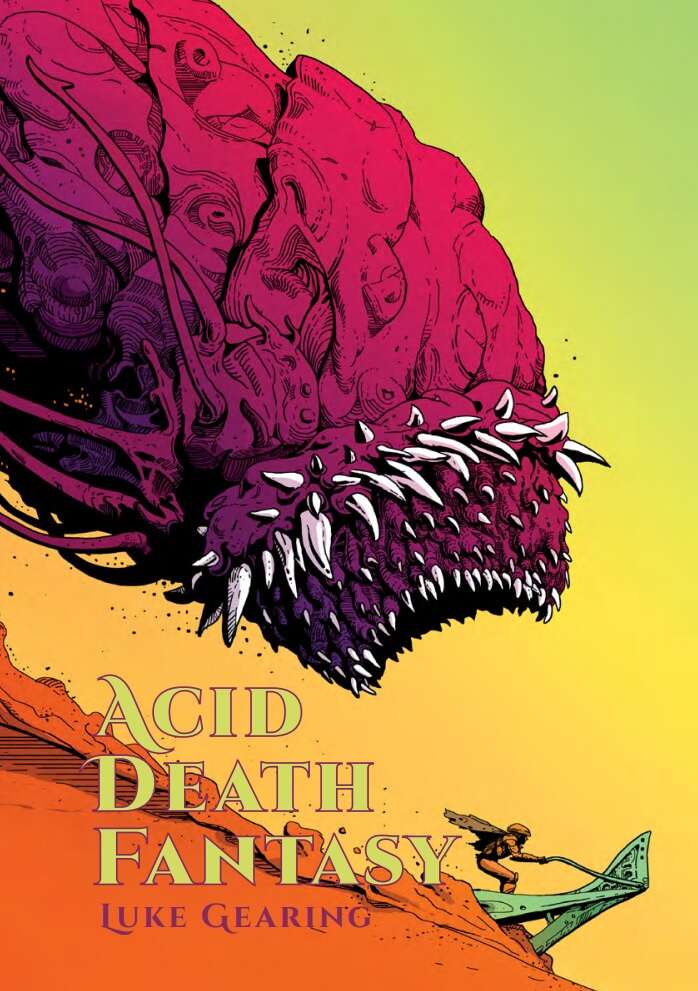
- As many flavorful backgrounds (classes) as you can dream up. 36 in the Troika! book. 36 more in Acid Death Fantasy. Many more all over the web. Not created equally, but all full of flavor. This is the old-school way.
- You can create a monster in seconds.
- A magic system that cost stamina to use. Cast too many spells, you die. Cast any spell and you risk death no matter who you are do to the OOPS! table (rolling double 6's.) All of the usual tropes are there, but they're powered down, e.g., you can try to put one person to sleep.
- A roll under and roll over system. Keeps you on your toes.
- Opposed roll combat, loser takes damage (I mention below that I would separate this into attack and defend.)
- Damage charts for weapons. At first glance I was like, eh no, but upon further examination, I approve. Some weapons are more dependable than others (swords), dealing moderate but steady damage. Yet, a clumsy weapon like a heavy maul varies from a little damage to a bruising lot.
- If you like the sci-fi element to the game, rifles are long barreled "Fusils" and guns are "pistolets." Ammo is a "plasmic core" that can also be huffed by wizards to fuel spells. I kid you not, this is cool stuff. Even if I left out the guns I would keep the plasmic core and rename it in some sorcerous way. Fallen Angel Dust, Essence of Dragon, etc.
- Deadly combat.
- Armor matters, but takes up space. This will break down if you ignore the inventory system and then everybody will be wearing heavy armor + shield. In which case, you should apply some sort of attack or damage roll penalty.
- You can use these rules for any genre.
- Initiative. It's cute, I get what they're going for: Chaos! But, collecting and drawing tokens (potentially lots of them) every time there's a fight, is way to fidgety for my taste. I would keep it more traditional, players roll a d6, monsters roll a d6 and add their initiative score. This way initiative still favors monsters. Perhaps a monster can attack after every PC goes. Perhaps you could roll a chaos die after every one goes, on a 6 the round ends and if you didn't get to act, too bad. Anyway, I would do something different.
- I would add an XP system. I'm not a fan of "getting better" whenever the GM says so. I like something a bit more concrete. I would keep the numbers low, hundreds not thousands. You would get it for the usual reasons, killing things (XP = their stamina) finding things, etc. And when you have enough to "level up" you would get 3 improvement rolls wherever you want them (or use the tick system and only improve skills used successfully as in the rules) of course they're not guaranteed to succeed. Perhaps every few "levels" you add 1 stamina. And every so many few levels, you can add a new skill or spell -- randomly(?). Something like that. You could maybe even create specific advancement skill/spell roll charts based on specific backgrounds.
- Prices. There are no prices (some baubles are priced in the intro adventure, listed in P (Pence) and SP (Silver Pence). No conversion is mentioned. This is no biggy, make up your own system. Of the top of my head, a weapon would cost in SP a number equal to its damage column 7+ (plus or minus 1d6 due to market prices.) Armor could cost it's bonus x 10. Any "item" might cost 2d6, 3d6 or 4d6 depending on the market (multiply by 5 or 10 for homebrew magic items.) Perhaps it takes a skill roll to find something. Perhaps create a black market skill for shady types. A Barter skill could be cool. To keep things simple, I would probably ignore the P and just use SP. Anything listed as P would be 1 SP. Or maybe gold with a silver standard.
- Magic items. Have to be careful here, a +1 to hit or to damage roll, that's it. If an item granted a +2 there should be a serious price to pay. Many items would simply grant spell-like powers. I would give magic items an unknown finite number of uses, a "depletion" score like in Numenera (an idea I like for any game.)
- Scrolls and a Use Scroll skill. Pretty straight forward here. Perhaps they don't drain you, but you can still roll OOPS! Or perhaps they drain you unless you roll doubles. And they would be expensive, 100 SP per casting cost. Or maybe just 50.
- Separate combat into attack and defense rolls. You might live a little longer. Combat seems more like a duel. More interesting. You defend as many times as you are attacked.
- The Strength skill could add +1 to damage rolls or perhaps let you carry more. Just a thought.
- Mighty Blows damage armor (as well as ((or instead of)) doing double damage) so that heavy becomes modest and modest becomes light and light becomes nothing. Likewise, a mighty blow could destroy a shield.
- Rolling doubles. Double 1's & 6's are both good and bad in this game, but you could make any doubles interesting to add a little spice to combat. You hit on a double, you get a free attack or action. Or you add +1 to your damage roll. Or maybe your spell cost 1 point less. Roll doubles on defense, get a free riposte, etc. Snake-Eyes and your weapon breaks or your foe gets a free attack. Also could add effects for magic weapons (1d6 extra armor-ignoring shock damage, or some such thing.) Roll doubles on a successful spell casting and it costs 1 point less, doubles on a failure and it costs 1 point more.
- Mutants. You could always add a random list of mutations for weird magic or mutant backgrounds, claws, wings, acid spit, chitinous skin, etc. But, for every beneficial mutation there should also be a negative one.
Sunday, December 6, 2020
What Happened In That Town?
Roll 1d20...
2. Purse Cut: You were robbed of 1d4 x 100 GP worth of treasure (or all of your coins if you didn't have that much) unless, you make a successful attack roll vs leather armor, which means you gut the bastard gaining 2d6 x 10 XP.
3.Charmed: You met a new friend. You liked them so much that you loaned them all of your cash, i.e., unless you saved vs spells and broke the asshole's nose gaining a +2 bonus vs all Charm spells from now on.
4. Royal Hunt: Somehow, you found yourself a guest at a Royal Hunt just outside of town. Make 3 ranged attack rolls vs leather +1 armor. Make all 3 and gain 1 point of charisma as word of your prowess spreads and people are pleased to meet you. Make 2 of 3 and you've impressed a nobleman who might sponsor your next expedition or spring you from jail, either way, you've got a royal favor in your back pocket. Make 1 of 3 and nothing changes for your forgettable ass. Miss all 3 and word spreads of your incompetence, lose 1 point of charisma as folks chuckle when they hear your name.
5. Stolen Steed: If you had a horse stabled at the Inn, it's gone. (Stable boy sold it.)
6. Old Friend: Old friend (of the same class and level as you) is now: (1d8) 1. A useless drunk lying in a ditch. 2. Captain of the guard. 3. A cultist selling flowers. 4. The owner of a brothel. 5. About to be hanged. 6. Leaving on a dragon quest. 7. Bootlegging magic potions. 8. Tells you that you've got a lot of nerve coming here...
7. Beggars: "Alms for the poor," she said as you walked through the Alley of Sadness. Did you give? What kind of coin? Copper--she nods and blesses you. Silver--her eyes light up as she thanks you and quickly hides the coin, others take notice. Gold--she's speechless, yet can't hide her hunger for the treasure, another tries to take it from her, but she fends him off. Platinum--she didn't even have a chance to react as she is buried beneath a mob of jealous beggars. Her fate was grim, but you meant well and the Gods that matter grant you a boon: You can reroll your next 1d4 failed rolls.
8. Witch Burning: She sure as hell didn't look like no witch, but you watched her burn just the same. And before the flames really started licking, she caught your eye and stared. And stared. And stared. And if you don't make 2 out of 3 saves vs spells you are now cursed with a -3 to all rolls until you can find and convince a member of her coven to set you straight. It won't be easy. It won't be cheap.
9. Assassin Strikes!: Only you know why that assassin tried to kill you. It was a tedious dual, but you fought him off.....or did you? Make 3 attack rolls vs leather +2 armor, succeed on 3 of 3 and you gain +1 to-hit. Succeed on 2 of 3 and you gain 1 hit point. Succeed on 1 of 3 and the assassin's poison saps you permanently of 1 point from a randomly rolled ability. Fail all 3...nice knowing you pal.
10. Tavern Brawl: You don't no whether he bumped you or you bumped him, or maybe you just hit on his girl, either way, it's on! Start making unarmed attack rolls vs unarmored. Make 3 in a row, you win and gain +2 to all reaction rolls in this town forever. Miss 2 in a row, you lose, spend the next 1d4 days in the stockades for unlawful behavior and suffer -2 to all reaction rolls in this town forever.
11. Fire!: There is no more town. This really sucks, but, anything that you weren't carrying on you was lost when the inn went up in flames. Sorry bud.
12. Plague: This is not the place you want to be right now! Sores and boils, bleeding eyes and cracked skin, vomit and shit. Turn around! Too late. Save vs paralysis until you have 3 consecutive successes or 3 consecutive failures. Pass and you're good, gain 1 point of constitution and immunity to this plague. Fail and you lose 1d4 hit points permanently and also lose 1 point of charisma due to plague scars.
13. Peasant Unrest: Chaos reigns. The taxes were too high, the royal abuses too many, and the food too scarce. Now, there's a Guillotine around every corner, buildings burn, neighbors pillage neighbors, and bodies hang from the bridge. You, my friend, were caught right in the middle of it. Make an attack vs leather to fend off the mob. Save vs breath to avoid the flames. Make another attack vs chain to beat back the guards. Save vs paralysis to avoid hunger. And save vs spells to forget the disturbing scenes of urban madness. Gain 100 XP for each successful roll you made, but, if you failed all 5 rolls you lose 1 point of wisdom as your mind is just a little more numb than it used to be.
14. Succubus: You are haunted by a Succubus every night until you make 2 consecutive saves vs Paralysis (1 save per night.) Every save you fail costs you 1d4 non-heal-able hit points, which ultimately return at a rate of 1d4 per week. If you made the first 2 saves in a row, she flees and you gain 2 points of Charisma...there's just something about you now.
15. Taxation: Property, trade, land, boarding, services, etc. Everything was taxed at ridiculous levels. How else was the king supposed to pay for his latest crusade? You're out an additional 3d4 x 10 GP. And if you don't pay, don't come here again, the guards know your face.
16. Strange Customs: Man, this fucking town. They made you eat something alive and squirming from the river, save vs poison. They don't bathe here, and neither did you, save vs disease. And why did it have to be snakes that they revered so much and allowed to squirm all over you no matter what you were doing? -save vs petrification. Also, if you wanted milk you had to drink it directly from the cow, because, that's how they did it, save vs poison, again. Curious how everything in town was painted in a dizzying, black and white checkered pattern, including these long winding streets and circular towers...man your head, save vs spells. If you make 3 of these 5 saves, gain 1 point of wisdom as you are now just a bit more worldly. But yeah, fuck this place.
17. Stalker: Someone is stalking you but they always manage to disappear before you can reach them and you're the only one who notices: (1d8) 1. Street urchin. 2. Cloaked figure. 3. Beautiful woman. 4. Handsome man. 5. Corpse. 6. Ghost. 7. Raven. 8. What is that thing...? How are they moving? (1d6) 1. Walking 2. Gliding 3. Sideways on walls 4. Tentacles 5. Crawling 6. Phasing in and out.
18. Festival of... (1d10) 1. Lights. 2. Saint So-and-So. 3. Beer! 4. Solstice. 5. Music. 6. Tournaments 7. Theatre. 8. Harvest. 9. The Dead. 10. You have no idea, but it was fun! Your wallet's a wee bit lighter now, 2d6 x 10 GP lighter to be exact, but, you gain half as much in XP for all the strange games and ceremonies you participated in. Good times.
19. False Accusation: "It was that one!" Screams the dirt-covered peasant surrounded by guards. Make a Reaction Roll as you plead your innocence: (2d6) 2-3. You're placed under arrest, hiring an advocate to plead your case costs you 3d6 x 10 GP and 2d4 days of time. 4-6. They're not buying it, roll again with -4 to your roll. 7-9. You're kind of convincing, roll again. 10-11. They believe you, but you suffer -2 to reaction rolls in this town for the duration of your stay. 12. They arrest the accuser for bearing false witness!
20. Siege: That's right, hero, you're stuck here for the next 1d6+6 months. Save vs poison to avoid starvation and rotting food supplies. Save vs wands to avoid artillery. Save vs paralysis to avoid the elements. Save vs breath to avoid their dragon. Save vs magic to avoid their wizards. Pass all 5 saves, congratulations you survived the siege and gain a level. Fail all 5 and lose 1 point from 3 random abilities due to stress and malnutrition. Otherwise, just be thankful you're alive.
Medieval Doors
These are not like modern doors. No knob to turn. No door handle. Often, the outside has a keyhole and nothing else. Maybe an iron loop or r...